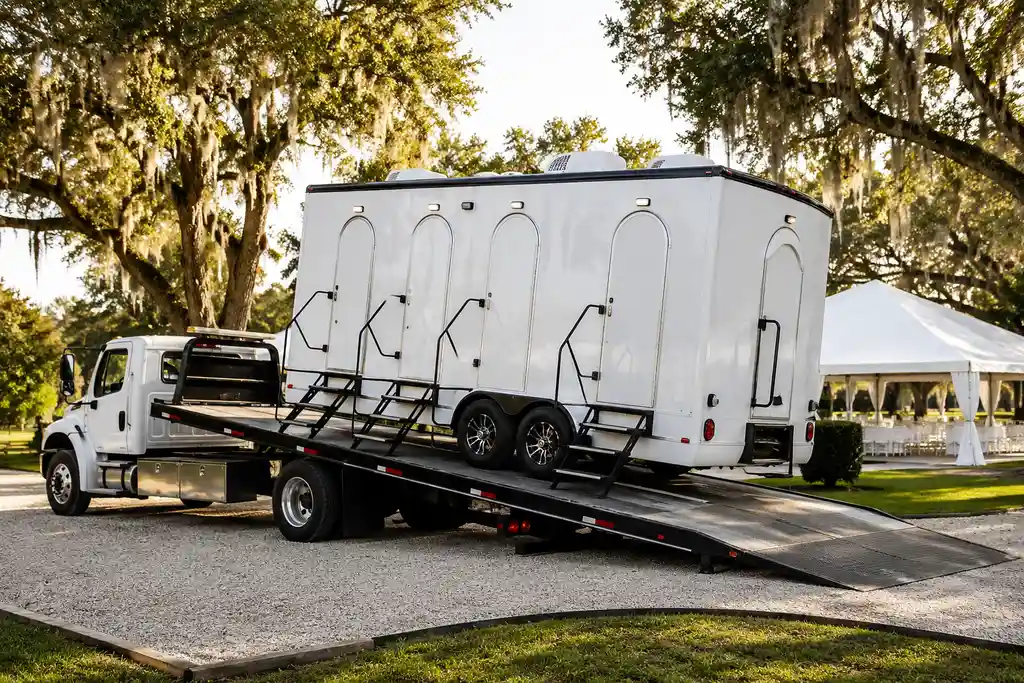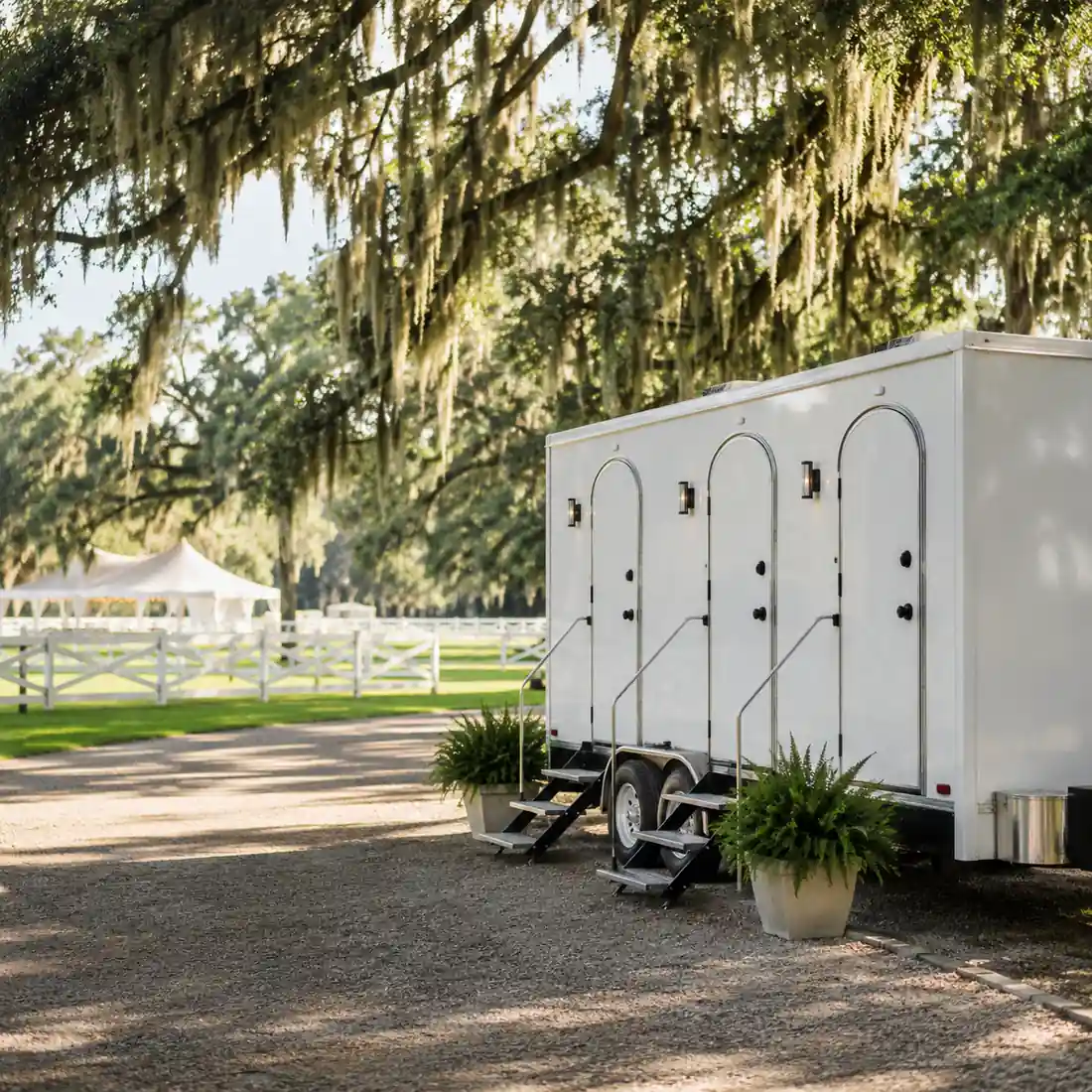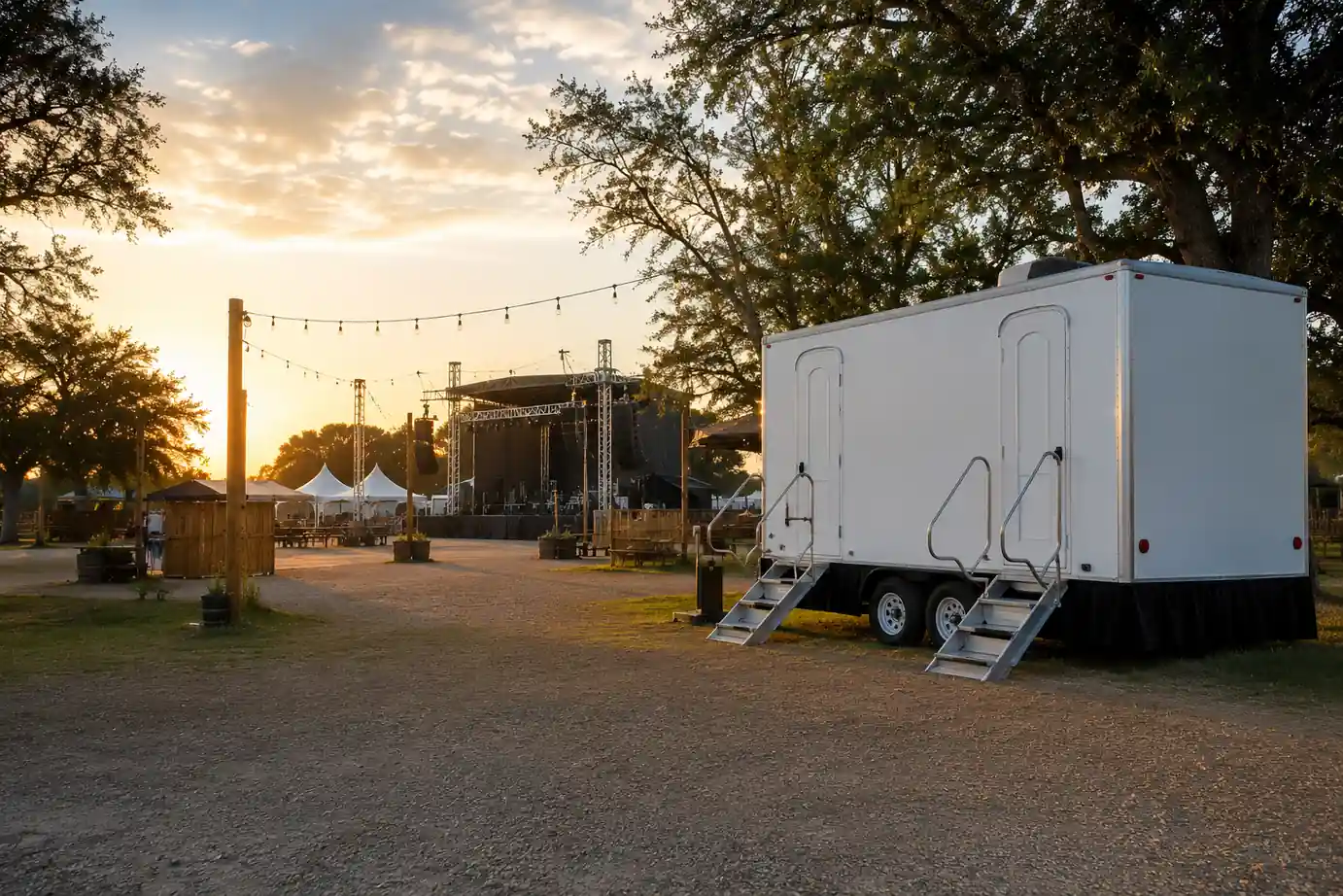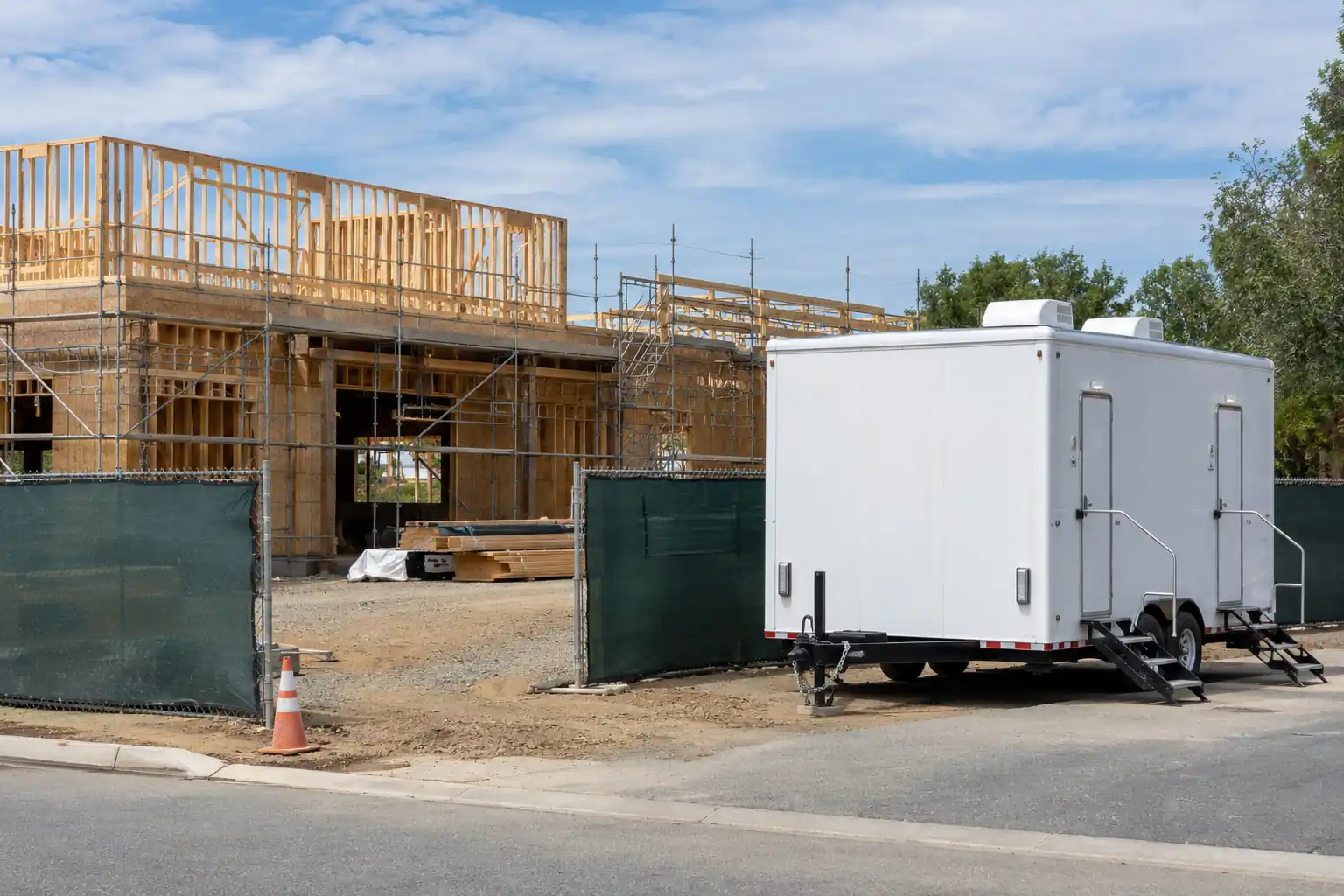
Estates, farms, and gardens make beautiful wedding settings, and they share one trait that the venue brochure rarely mentions: they weren’t built to host a hundred guests with no indoor restrooms. A restroom trailer solves the capacity problem, but putting a full-size restroom trailer on a manicured lawn or down a farm lane creates its own set of questions. That’s what outdoor wedding venue restroom logistics is really about: truck access, approvals, grounds protection, power, and paperwork.
This guide focuses on those venue-specific details, drawing on the requirements behind Pinnacle’s wedding restroom trailer rentals. Pinnacle regularly delivers to rural estates, farm properties, and open-air venues and coordinates site access and setup in advance, so the goal is to make sure the details are settled before delivery day.
The Quick Version: Seven Things to Confirm Before You Book
- Truck route. The trailer arrives by flatbed truck, so confirm the route, gate width, and overhead clearance all the way to the placement spot.
- A hazard-free, level spot. The area must be clear of tree limbs, shrubs, low wires, and uneven ground, and well lit.
- Written approval. Placement on grass, dirt, or landscaped areas needs prior approval from you, the property manager, or the event coordinator.
- Irrigation and utilities. Know where sprinkler lines and underground utilities run before the truck rolls across the lawn.
- Power. A dedicated 20-amp or 30-amp circuit within 100 feet, or a generator.
- Water. A spigot within hose reach, or a fresh-water tank, which is included.
- Insurance and paperwork. Certificates of insurance, plus the deposit and balance schedule.
What Changes With the Venue Type
The same trailer behaves differently depending on where it’s going. Here is how the three venue types compare:
| Venue Type | Typical Logistics Challenge | What to Check First |
| Estate | Gated or winding drives, mature trees with low limbs, irrigated lawns, grounds rules | Truck route and gate access, overhead clearance, sprinkler locations, written venue approval |
| Farm or barn | Uneven terrain, locked gates, animals, no nearby power or water | Gate and livestock plan, distance to power and water, generator need, soft ground after rain |
| Garden | Delicate plantings, narrow paths, limited vehicle access | A hard-surface spot near the edge, protected beds, a short route for the truck |
Estates and Historic Grounds
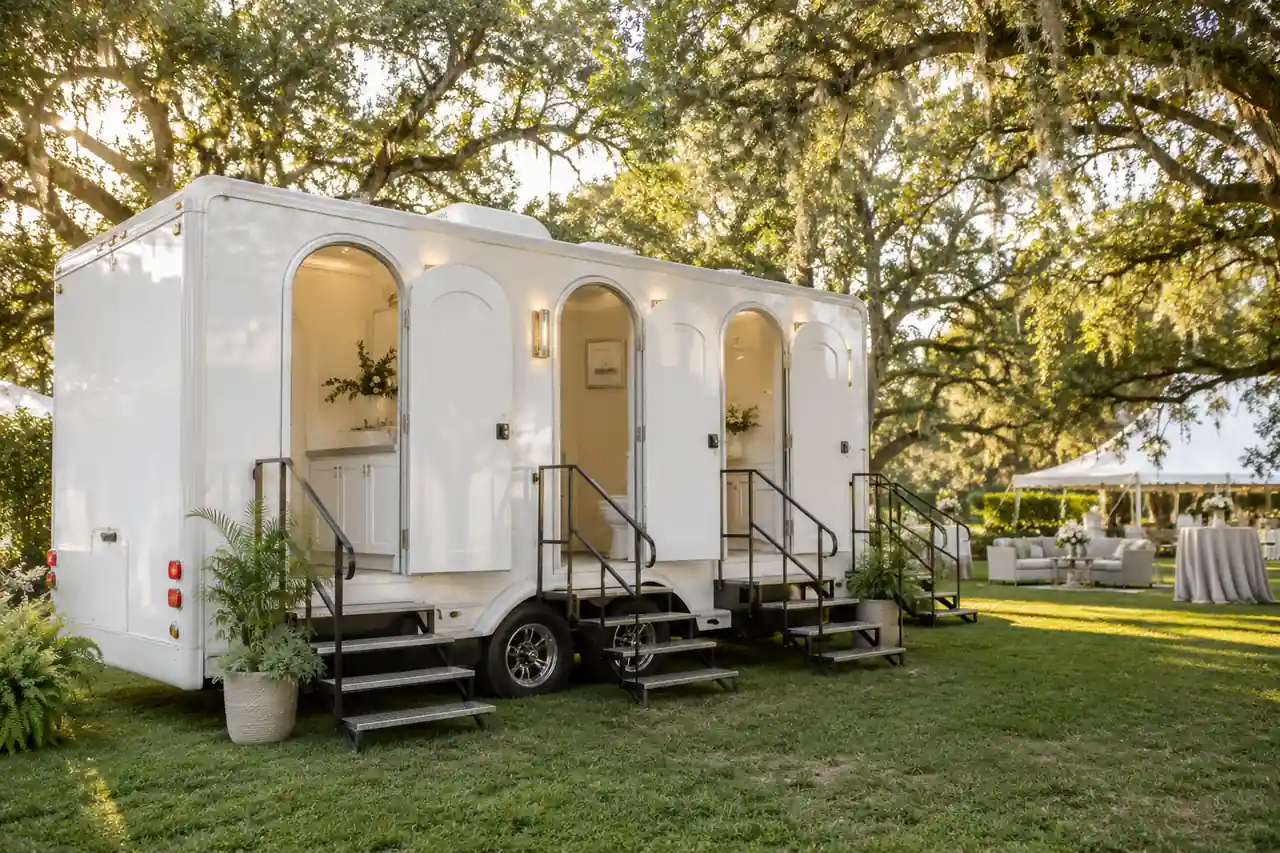
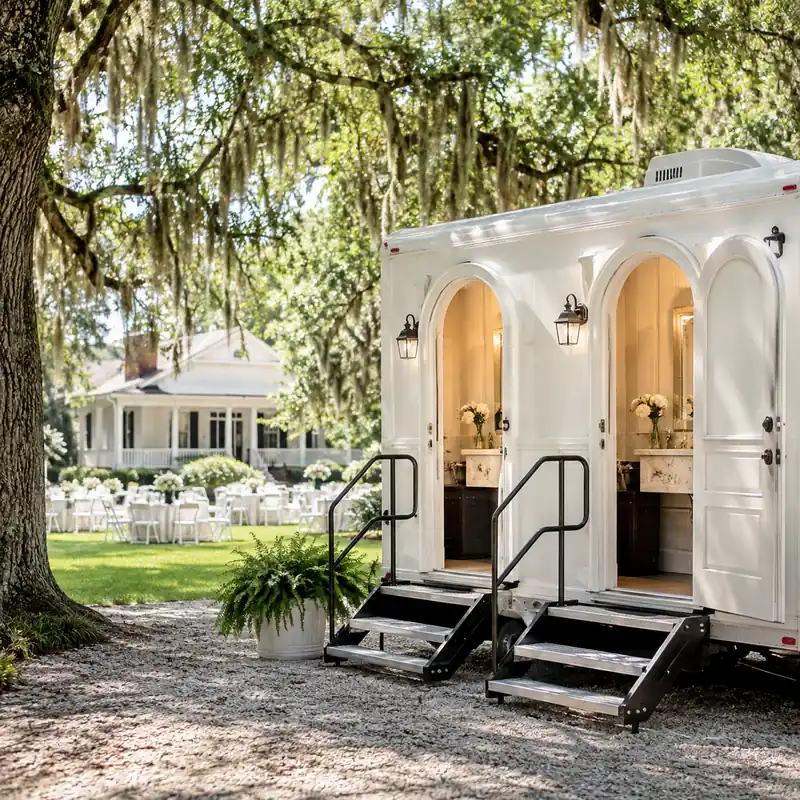
Estates often mean long or gated drives, mature oaks with low limbs, and irrigated lawns, plus rules from the venue about what can go where. Tree limbs and low wires matter because Pinnacle’s terms require the placement area to be clear of them, and a trailer can’t be nudged around once it’s set. A hard surface near the ceremony and reception space, such as a gravel or paved area, is usually the easiest approval. The Cottage-Style Restroom is designed to blend into scenic venues like these.
Farms and Barn Venues
Farms tend to have gravel lanes, which is good, but also uneven ground, locked gates, and sometimes animals. Pinnacle’s terms treat locked gates and animals as service limitations, so decide in advance who opens the gate for delivery, servicing, and pickup, and how livestock will be kept clear. Power and water are often far from where you want the trailer, so measure to the nearest source or plan for a generator.
Garden Venues
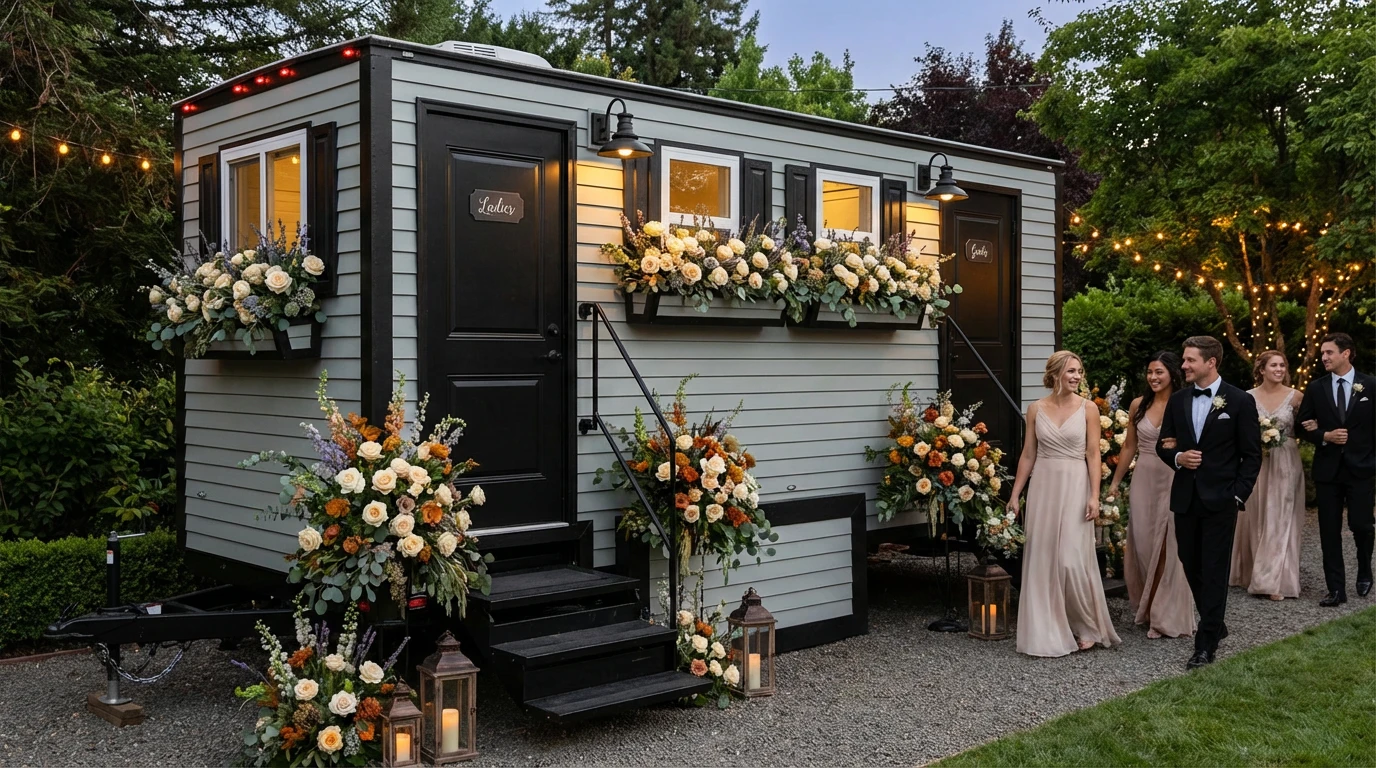
Gardens are the most delicate. Flower beds, narrow paths, and limited vehicle access all work against a large trailer. The usual solution is a hard-surface spot at the edge of the grounds, such as a service drive or parking area, with a short, clear route for the truck. Mark and protect beds before delivery.
Getting Approval: Venue, Coordinator, and Insurance
Three groups may need to say yes before the trailer arrives. First, the venue or property manager, who may restrict where vehicles can drive and where equipment can sit. Second, your event coordinator, who can fold the trailer’s arrival into the setup schedule. Third, your insurer. Pinnacle’s terms ask the customer to carry commercial general liability insurance of at least $1,000,000 per occurrence, plus property insurance adequate to cover the equipment, to add Pinnacle as an additional insured and loss payee, and to provide certificates of insurance. That’s more than many couples expect, so ask your insurance provider how to meet it and ask Pinnacle what documentation it needs.
For the payment side, the terms describe a non-refundable deposit, typically 50 percent, to secure the date, with the balance due seven days before the event and cancellations or reschedules needed at least seven days ahead. For more on what to ask before signing, see restroom trailer rental contract questions.
Protecting the Grounds
A loaded trailer on soft ground leaves marks. Under Pinnacle’s terms, the firm, level surface is the default, and placement on grass, dirt, mud, or landscaped areas happens only with prior approval. Pinnacle isn’t responsible for ground damage such as ruts, tire tracks, lawn or landscaping damage, sprinkler systems, or underground utilities, and by direct placement the customer takes responsibility for any resulting damage. Check your venue contract to see whether you’re also responsible for the venue. Before delivery, walk the truck route, ask the venue to mark sprinkler heads and buried lines, and consider the weather. For couples with a tent, see tent wedding restroom placement for how the layout fits together.
Power, Water, and Light
Rural and garden venues often lack exterior power where you need it. The trailer must be within 100 feet of a power source on a dedicated circuit with no shared loads, or a generator can be provided for an additional fee; the details are in Pinnacle’s generator guide. For water, Pinnacle supplies up to 100 feet of hose to a standard spigot, and any additional hose is the customer’s responsibility. If there’s no spigot, a fresh-water tank is provided and included. Lighting matters too: the placement area needs to be well lit, and a lit path helps guests find the trailer after dark.
Day-of Logistics
A few small habits prevent most day-of problems:
- Unlock and open gates for delivery, servicing, and pickup. If a locked gate or blocked access prevents service, additional trip fees can apply.
- Keep the trailer where it was placed. It can’t be moved without prior written approval.
- Name one point person, such as the day-of coordinator, to keep access clear and call Pinnacle if something seems off, like slow drainage.
- Post a small sign asking guests to flush only toilet paper, since wipes and other items can cause problems and extra charges under the terms.
- Keep the surrounding area free of debris and obstructions.
For the full planning timeline around these details, see the wedding restroom rental checklist.
Weather Plan for Outdoor Venues
The trailer is enclosed and keeps working in rain, so the risk is mostly the ground and the access route. Pinnacle may delay, modify, or cancel delivery, service, or removal in severe or unsafe weather, and may remove or secure a unit if conditions threaten safety. Ask your venue about an alternate hard-surface spot in case the lawn is too soft, and walk the grounds after rain before delivery day if you can.
Common Mistakes
- Assuming the venue’s approval covers driving a truck onto the lawn
- Forgetting that sprinkler systems and buried lines are the customer’s risk once placement is directed
- Leaving a gate locked or a lane blocked when the truck arrives
- Overlooking the insurance certificate requirement until the week of the wedding
- Choosing a spot under low limbs or wires, then needing to move the trailer
- Measuring to power by eye instead of confirming the 100-foot limit
Frequently Asked Questions
Do I need the venue’s permission to place a trailer on the lawn?
Yes. Under Pinnacle’s terms, placement on grass, dirt, mud, or landscaped areas only happens with prior approval from the customer, property manager, or event coordinator. Get the venue’s approval in writing, and share any restrictions with Pinnacle when you request a quote.
Who pays if the trailer damages the lawn or sprinklers?
Under the terms, Pinnacle isn’t responsible for ground damage, including ruts, tire tracks, lawn or landscaping damage, sprinkler systems, and underground utilities. By directing placement, the customer assumes responsibility. Choosing a hard surface and having sprinklers marked reduces the risk.
What happens if the gate is locked when the truck arrives?
If Pinnacle can’t access, service, or retrieve the unit because of a locked gate or other site restriction, additional service or trip fees may apply, and the service is considered fulfilled if access is obstructed. Arrange for someone to open gates for delivery, servicing, and pickup.
Do I need insurance for the restroom trailer?
Pinnacle’s terms require the customer to maintain commercial general liability insurance of at least $1,000,000 per occurrence and property insurance covering the equipment, name Pinnacle as additional insured and loss payee, and provide certificates of insurance. Talk with your insurance provider early, and confirm exactly what Pinnacle needs.
Conclusion
Getting outdoor wedding venue restroom logistics right comes down to confirming access, approvals, grounds protection, power and water, and insurance well before the day, then assigning one person to keep it all on track. Do that, and a trailer at an estate, farm, or garden venue becomes a seamless part of the day. Request a free quote with your venue details, and the Pinnacle team, which serves service areas across South Carolina, will respond within 24 hours with a tailored quote.